
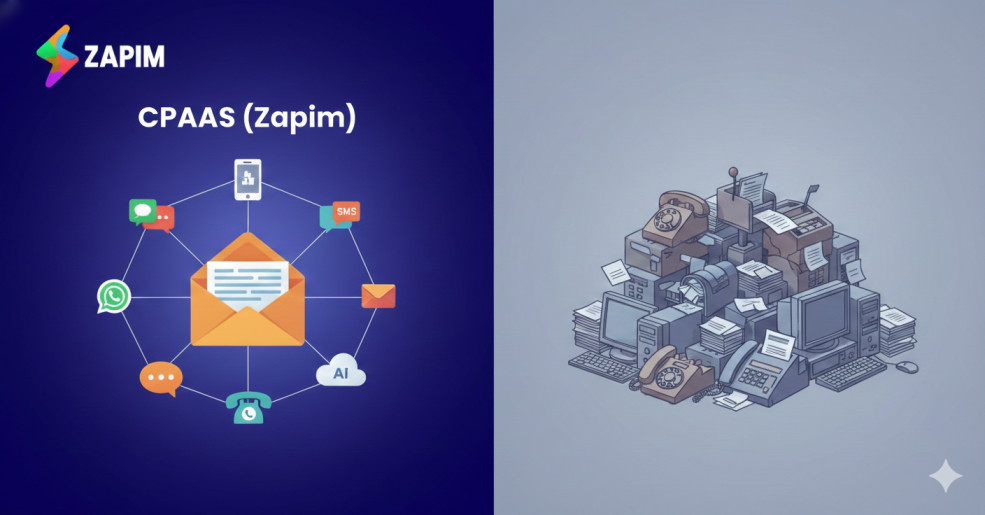
CPaaS vs. Traditional Communication: Why Modern Businesses are Switching to Zapim
There was a time when business communication was simple. You had a phone number, an email address, and maybe a basic IVR. Customers called, emails were answered when someone had time, and that was considered enough.
That world doesn’t exist anymore.
Customers now expect updates instantly. They want confirmations on WhatsApp, alerts over SMS, reminders before appointments, and quick replies without waiting on hold. Traditional communication systems weren’t built for this kind of behaviour, and businesses are feeling the gap more than ever.
This is why conversations around CPaaS vs traditional communication are becoming more relevant. The shift isn’t about chasing trends, it’s about keeping up with how people actually communicate today.
What Traditional Business Communication Looks Like
Most businesses are still running on systems that look more or less the same as they did years ago. Phone calls are handled through landlines or VoIP, emails sit on internal servers, and SMS or IVR functions run on separate tools altogether.
On the surface, this setup feels familiar and manageable. But as soon as volume increases or customers start expecting faster responses, things begin to break down.
Scaling usually means more hardware, more vendors, and more cost. Integrating communication data with CRM or support tools is often messy or impossible. And when something goes wrong, troubleshooting takes time, time customers don’t have the patience for anymore.
The biggest issue, though, is fragmentation. Conversations happen across calls, emails, texts, and apps, but none of it lives in one place. From a customer’s point of view, it feels disconnected.
What CPaaS Platform for Business Changes
CPaaS, or Communication Platform as a Service, takes a completely different approach. Instead of relying on physical systems and standalone tools, communication runs through the cloud and connects directly to a business’s applications through APIs.
Platforms like Zapim allow businesses to send messages, trigger alerts, automate responses, and manage conversations across channels, all without setting up or maintaining infrastructure.
The shift isn’t just technical. It changes how communication fits into daily operations. Messages become part of workflows. Notifications trigger actions. Conversations are tracked, measured, and improved over time.
And because it’s cloud-based, businesses pay for what they use rather than investing heavily upfront.
CPaaS vs Traditional Communication: Key Differences
The contrast between CPaaS and traditional communication becomes obvious once you look at how businesses actually operate.
Traditional systems are slow to adapt. Scaling up usually means planning weeks ahead, coordinating with vendors, and absorbing higher fixed costs. CPaaS platforms scale quietly in the background, whether a business sends a few hundred messages or a few million.
Channels are another clear divide. Older systems focus on calls and emails. CPaaS platforms support SMS, WhatsApp, voice, notifications, and APIs together, which reflects how customers already communicate.
Integration is also a major factor. Traditional communication often sits outside core business tools, creating silos. CPaaS connects communication directly with CRM, ERP, and support systems, reducing manual work and improving visibility.
And then there’s cost. Legacy setups lock businesses into maintenance-heavy models. CPaaS keeps spending flexible and predictable, especially as communication needs change.
Why Businesses Are Choosing Zapim
Zapim fits naturally into how modern teams work. It doesn’t force businesses to change everything, it simply replaces the outdated parts that slow communication down.
One of the biggest reasons companies switch is control. Zapim allows teams to decide how communication flows, which channels are used, and how automated or personal interactions should be.
Instead of juggling multiple tools, everything runs from a single platform. Messages are sent faster, responses are more consistent, and customers don’t feel like they’re talking to different systems each time.
Reliability also plays a big role. Missed OTPs, delayed alerts, or failed notifications can cost trust. Zapim is built to handle high volumes without breaking, while giving businesses real-time visibility into what’s working and what isn’t.
Automation, when done right, is another advantage. Zapim makes it possible to automate reminders, alerts, confirmations, and responses without creating complexity or disrupting existing systems.
Where CpaaS Clearly Outperforms Traditional Communication
The impact of CPaaS becomes most obvious in day-to-day use.
E-commerce businesses rely on instant order updates, delivery notifications, and payment alerts to keep customers informed. Fintech companies depend on fast, reliable OTPs and transaction messages. Healthcare providers need appointment reminders and follow-ups that patients actually see. Large organisations require internal alerts and customer campaigns that work at scale.
In all these cases, traditional systems struggle to keep up. CPaaS handles the volume, the speed, and the expectations without friction.
So, Which One Is Built for What Comes Next?
Customer communication is no longer one-way or slow. It’s real-time, personalised, and happens across multiple platforms at once. Systems built for calls and emails alone were never meant for this.
CPaaS platforms like Zapim are designed to adapt. They scale when needed, integrate easily, and evolve as communication habits change. Businesses don’t have to rebuild everything each time expectations shift.
Final Thoughts
The move from traditional communication to CPaaS isn’t about replacing tools — it’s about changing how businesses connect with people.
Companies that switch do so because the benefits are clear: faster communication, lower overheads, better customer experience, and more control. Zapim enables businesses to communicate in ways that feel natural to customers today.
It’s not an upgrade to an old system. It’s a better starting point altogether.
FAQs
Q1 What does CPaaS actually do?
CPaaS lets businesses send messages, alerts, and notifications through cloud-based APIs without managing their own communication infrastructure.
Q2 Why are traditional communication systems becoming outdated?
They rely on hardware, scale slowly, and don’t support modern messaging channels customers prefer.
Q3 Is Zapim only for large enterprises?
No. Zapim works just as well for startups and growing businesses because pricing and scale adjust with usage.
Q4 Can Zapim work with existing software?
Yes. It integrates with CRM, ERP, and support tools, making communication part of daily workflows.
Q5 Is CPaaS secure enough for customer data?
Yes. Platforms like Zapim use secure APIs, monitoring, and compliance controls to protect communication.